Friday, February 29, 2008
The Archer's Tale (Book #20)
The Archer's Tale (Bernard Cornwell, 2001) is the first of a trilogy set against the Hundred Years' War and featuring a quest for the Holy Grail. Having finished the Sharpe series, I'm working my way through Cornwell's other works. The 14th century isn't "my" era the way the early 19th is, but this series had an appealing narrator in the misfit, fish-out-of-water vein I expect (and always enjoy) from Cornwell, and he made me more interested in longbows and obscure medieval religious quarrels than I ever expected to be.

Thursday, February 28, 2008
Identical Strangers (Book #19)
Identical Strangers (Elyse Schein and Paula Bernstein, 2007) tells the story of identical twins separated, not at birth, but after six months together in foster care. They rediscovered each other in their mid-30's when Elyse went looking for more information on her background. The sisters got along well from the beginning, though with occasional rocky moments, and together they went sleuthing to find out more about who they were--only to discover the unpalatable truth that they were most likely separated deliberately as part of a study researching genetic vs. environmental components of mental illness among identical twins with a family history of instability. (Such a study would never be approved now, but was considered marginally acceptable when they were born in 1968.)
Wednesday, February 27, 2008
An Excerpt of Sorts
I haven't been blogging much lately because we STILL don't have our laptop back, the one my daughter broke a week and a half ago.
I don't usually post excerpts from my WIP (and, strictly speaking, what I'm about to post isn't an excerpt). But I'm part of an online community that has a weekly drabble challenge. Each Sunday the moderator posts a topic, usually a word or phrase but sometimes an image, and if you're inspired by it you write a 100-word story, poem, essay, etc. about it. (Opinions differ on whether it has to be exactly 100 words. I'm not a purist and will post anything from 90 to 110 or so, but the drabble below happens to come in right at 100.)
This week's topic is "transformation," and it got me thinking about key moments for each of my main characters--the moments where their world shifts, or they accept the challenge to change the world. So I'm trying to distill those change moments down to 100 words and write them so they make sense without the epic context of the story.
Anyway, without further ado, here's the first one. I haven't written the scene surrounding this yet--it's from somewhere near the climax of Book 2, and I'm only halfway through Book 1:
If This Be Treason
An island castle in a mountain-ringed lake. The land where her ancestors’ bones rest, the hearthside where she learned of Gordon courage and loyalty.
Now her loyalties divide her. Stay and be true to family and heritage, but betray the war-leader who trusts her, the queen to whom she pledged fealty, and the friend she loves more than a brother.
If she leaves this valley now she can never return.
He’s watching her—her friend the Sassenach soldier. She can see he’ll understand, and forgive her, if she stays.
“Hurry,” she says. “If we ride fast, we can warn them.”
I don't usually post excerpts from my WIP (and, strictly speaking, what I'm about to post isn't an excerpt). But I'm part of an online community that has a weekly drabble challenge. Each Sunday the moderator posts a topic, usually a word or phrase but sometimes an image, and if you're inspired by it you write a 100-word story, poem, essay, etc. about it. (Opinions differ on whether it has to be exactly 100 words. I'm not a purist and will post anything from 90 to 110 or so, but the drabble below happens to come in right at 100.)
This week's topic is "transformation," and it got me thinking about key moments for each of my main characters--the moments where their world shifts, or they accept the challenge to change the world. So I'm trying to distill those change moments down to 100 words and write them so they make sense without the epic context of the story.
Anyway, without further ado, here's the first one. I haven't written the scene surrounding this yet--it's from somewhere near the climax of Book 2, and I'm only halfway through Book 1:
If This Be Treason
An island castle in a mountain-ringed lake. The land where her ancestors’ bones rest, the hearthside where she learned of Gordon courage and loyalty.
Now her loyalties divide her. Stay and be true to family and heritage, but betray the war-leader who trusts her, the queen to whom she pledged fealty, and the friend she loves more than a brother.
If she leaves this valley now she can never return.
He’s watching her—her friend the Sassenach soldier. She can see he’ll understand, and forgive her, if she stays.
“Hurry,” she says. “If we ride fast, we can warn them.”
Friday, February 22, 2008
The Vanishing Viscountess (Book #18)
The Vanishing Viscountess (Diane Gaston, 2008) is the kind of historical romance I'm always wanting to read but am rarely fortunate enough to find. It's tightly plotted, romantic, and well-researched. Best of all, nothing feels out-of-proportion. The stakes are high--the heroine is wanted for a murder she didn't commit--but the characters' reactions are appropriate to their situation, making the story dramatic rather than over-the-top and melodramatic.
It's an excellent book, but I feel compelled to rant a bit about its cover. I'm not at all ashamed of reading romance. I'll tell anyone I talk books with that romance is among my favorite genres. I also tell them that I wrote three romance manuscripts, and that I switched genres because I think historical adventure is a better fit for my voice, the kind of heroes I write, and the stories I want to tell, not because I think it's somehow superior. But as I read The Vanishing Viscountess in the cafeteria and at the bus stop today, I made sure to hide the cover, or at least to cover the bare-chested guy, because it's just so silly and cheesy. I did the same when I was reading this book and this one.
It's honestly not that I hide any and all obvious romance covers. I read this openly on a city bus, though I'm not wild about the pink. And Jo Beverley has had some gorgeous covers I'd read with pride anywhere.
But what's with the shirtlessness, or men ripping open their shirts looking like Superman on a day he forgot his tights? It's not sexy, at least not to me. You want sexy, show me fully clad Regency men, especially if they're in uniform like the ones on the second Beverley cover. Men just don't dress a quarter so well anymore! Or if you're going to show the undershirts, at least get them right. They were pullovers, with an open throat and a button or two at the top, but they didn't button all the way down. It really annoys me that romance covers UNIVERSALLY get this wrong, because it's not like it's an obscure detail, or that it would cost more to paint a period-correct shirt. And it's not like accurate shirts aren't sexy, either. Exhibit A. And though Colin Firth does nothing for me, obviously a lot of women thought he looked perfectly fine climbing out of that pond by Pemberley. So I can't come up with any explanation for why romance publishers always get this wrong except that they think women who read romance just aren't as smart and aren't as worth taking trouble over as the audience for the Sharpe series (probably at least half male, even with the Sean Bean factor bringing in the ladies) or Pride and Prejudice viewers (people who care about Great Literature).
But really. All I need are covers I don't feel the need to go into contortions to hide when I'm reading on the bus. Is that too much to ask?
It's an excellent book, but I feel compelled to rant a bit about its cover. I'm not at all ashamed of reading romance. I'll tell anyone I talk books with that romance is among my favorite genres. I also tell them that I wrote three romance manuscripts, and that I switched genres because I think historical adventure is a better fit for my voice, the kind of heroes I write, and the stories I want to tell, not because I think it's somehow superior. But as I read The Vanishing Viscountess in the cafeteria and at the bus stop today, I made sure to hide the cover, or at least to cover the bare-chested guy, because it's just so silly and cheesy. I did the same when I was reading this book and this one.
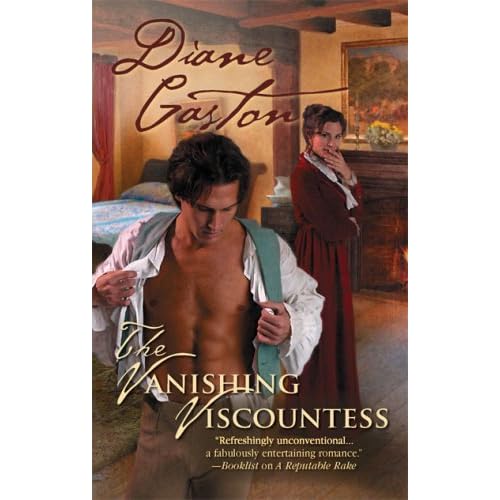
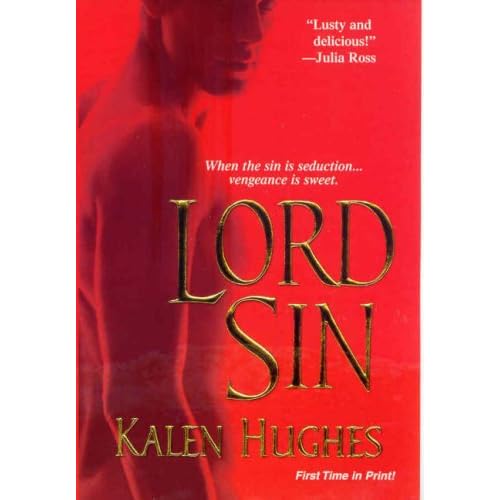

It's honestly not that I hide any and all obvious romance covers. I read this openly on a city bus, though I'm not wild about the pink. And Jo Beverley has had some gorgeous covers I'd read with pride anywhere.

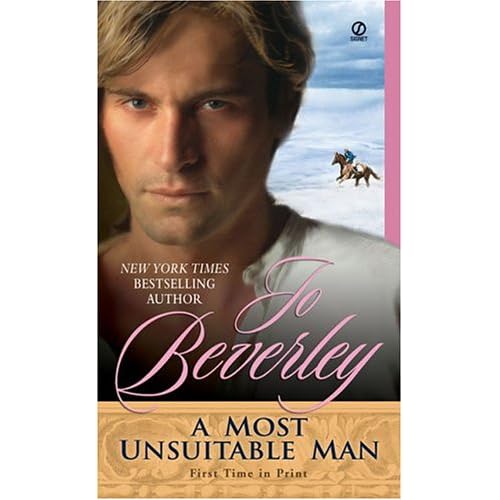
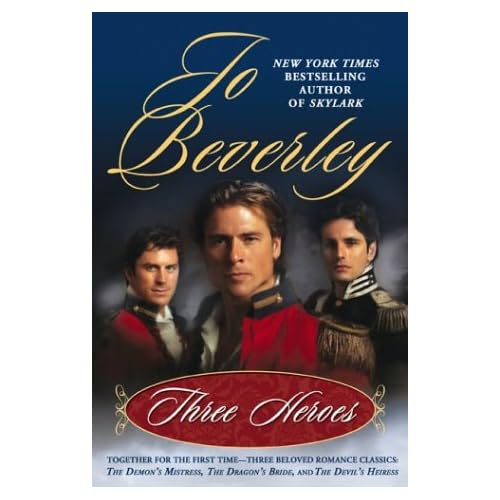
But what's with the shirtlessness, or men ripping open their shirts looking like Superman on a day he forgot his tights? It's not sexy, at least not to me. You want sexy, show me fully clad Regency men, especially if they're in uniform like the ones on the second Beverley cover. Men just don't dress a quarter so well anymore! Or if you're going to show the undershirts, at least get them right. They were pullovers, with an open throat and a button or two at the top, but they didn't button all the way down. It really annoys me that romance covers UNIVERSALLY get this wrong, because it's not like it's an obscure detail, or that it would cost more to paint a period-correct shirt. And it's not like accurate shirts aren't sexy, either. Exhibit A. And though Colin Firth does nothing for me, obviously a lot of women thought he looked perfectly fine climbing out of that pond by Pemberley. So I can't come up with any explanation for why romance publishers always get this wrong except that they think women who read romance just aren't as smart and aren't as worth taking trouble over as the audience for the Sharpe series (probably at least half male, even with the Sean Bean factor bringing in the ladies) or Pride and Prejudice viewers (people who care about Great Literature).

But really. All I need are covers I don't feel the need to go into contortions to hide when I'm reading on the bus. Is that too much to ask?
Service Included (Book #17)
If and when I finally sell my first book, my husband has promised to take me to Canlis or the Herb Farm. If I ever make the NYT bestseller list (extended counts!), I've promised to take him to the French Laundry. So naturally I was intrigued by Service Included (Phoebe Damrosch, 2007), the memoir of a waitress at the French Laundry's NYC sister restaurant, Per Se.
Damrosch's story is of interest to foodies, but not as much so as it could be--the focus was more on the author's personal life and less on the food at Per Se and/or dishing the dirt on its wealthy, famous, and powerful clientele than I expected or wanted. And as for her personal life, girlfriend, if he cheats with you, he'll cheat on you. And even if there are some exceptions to that rule, if he cheats with you, and then cheats on you in the early stages of your relationship before making promises of exclusivity and fidelity...let's just say there's a pattern developing.
Damrosch's story is of interest to foodies, but not as much so as it could be--the focus was more on the author's personal life and less on the food at Per Se and/or dishing the dirt on its wealthy, famous, and powerful clientele than I expected or wanted. And as for her personal life, girlfriend, if he cheats with you, he'll cheat on you. And even if there are some exceptions to that rule, if he cheats with you, and then cheats on you in the early stages of your relationship before making promises of exclusivity and fidelity...let's just say there's a pattern developing.
Thursday, February 21, 2008
The Eldest Brother (Book #16)
One of the lesser-known real people who shows up in my alternative history is Richard Wellesley, the Duke of Wellington's oldest brother. In the bibliography of one of my Wellington sources, I found The Eldest Brother: The Marquess Wellesley, 1760-1842 (Iris Butler, 1973). I asked for it from ILL, because I decided I'd be more confident about using him as a character if I read a book or two focused on him rather than just seeing him as a bit player in his famous brother's story.
Reading it forced me to alter my mental image of Richard and to change my fictional plans for him. I'd been predisposed to dislike him, because he tends to come across in Wellington biographies as a bit of a soulless autocrat. I suppose I shouldn't be surprised to discover the truth is a bit more complicated than that, because Wellington himself comes across the exact same way unless you're willing to look beneath the surface.
I ended up feeling sorry for Richard. He was forced to become paterfamilias at the age of 21, when his father died and left him with a mountain of debts and five younger siblings. He worked hard for decades at his political and diplomatic career, in particular during a long term as governor-general of India, only to never quite get the fortune and acclaim he longed for. And then he had to watch one of his own younger brothers, the one who was arguably the most trouble for him to get established in life, get all the fame, wealth, and honor anyone could dream of. That had to rankle, even though AFAICT Wellington was reasonably gracious about the situation. (Reasonable graciousness being the most one could expect from a Wellesley--they were a proud, prickly family with hot tempers they controlled with a varying degree of success, and the brothers had their fair share of quarrels.) Richard and Arthur (i.e. Wellington) were the stars of a gifted family, and were close in terms of ability. I think Arthur was so much more successful because he was far more practical and emotionally stable--though I can't help wondering how much of that was because he had time to grow up and assume responsibility on his own terms, while Richard had it thrust upon him before he was old enough to be ready for it.
Anyway, I had trouble wading through all the political alliances and quarrels in the book, though I'm glad I did, because now I can make my own version of Richard Wellesley richer and more respectful of the real thing.
Reading it forced me to alter my mental image of Richard and to change my fictional plans for him. I'd been predisposed to dislike him, because he tends to come across in Wellington biographies as a bit of a soulless autocrat. I suppose I shouldn't be surprised to discover the truth is a bit more complicated than that, because Wellington himself comes across the exact same way unless you're willing to look beneath the surface.
I ended up feeling sorry for Richard. He was forced to become paterfamilias at the age of 21, when his father died and left him with a mountain of debts and five younger siblings. He worked hard for decades at his political and diplomatic career, in particular during a long term as governor-general of India, only to never quite get the fortune and acclaim he longed for. And then he had to watch one of his own younger brothers, the one who was arguably the most trouble for him to get established in life, get all the fame, wealth, and honor anyone could dream of. That had to rankle, even though AFAICT Wellington was reasonably gracious about the situation. (Reasonable graciousness being the most one could expect from a Wellesley--they were a proud, prickly family with hot tempers they controlled with a varying degree of success, and the brothers had their fair share of quarrels.) Richard and Arthur (i.e. Wellington) were the stars of a gifted family, and were close in terms of ability. I think Arthur was so much more successful because he was far more practical and emotionally stable--though I can't help wondering how much of that was because he had time to grow up and assume responsibility on his own terms, while Richard had it thrust upon him before he was old enough to be ready for it.
Anyway, I had trouble wading through all the political alliances and quarrels in the book, though I'm glad I did, because now I can make my own version of Richard Wellesley richer and more respectful of the real thing.
Tuesday, February 19, 2008
VeggieTales: Convenience Food
Tonight the husband is at a Meetup with blogging friends, so the daughter and I were on our own. There are leftovers in the fridge, but I'd already had two meals of kugel in a row and didn't want a third. I really, REALLY wanted to cheat. A chicken club from Kidd Valley sounded like the perfect meal. But I had to go by the grocery store anyway to get bread for tomorrow night's dinner, so I decided to at least look at the vegetarian options.
I didn't want a cheese pizza after my previous experience with cheese overkill, but I found a vegan pizza from Amy's that was basically just a vegetable tart. Sun-dried tomatoes, artichoke hearts, onions, peppers, etc. And it was surprisingly good, very rich and sweet-tart.
I fed my daughter a kid's meal with chicken nuggets, kinda hoping that, as she often does, she'd leave some of the nuggets uneaten. Then I wouldn't be so much cheating as just not wasting food.
She ate them all.
One somewhat surprising note: I'm up four pounds since Lent began. I realized that I've been using "no meat" as an excuse for every other caloric indulgence. I need that ice cream for protein! Oops.
I didn't want a cheese pizza after my previous experience with cheese overkill, but I found a vegan pizza from Amy's that was basically just a vegetable tart. Sun-dried tomatoes, artichoke hearts, onions, peppers, etc. And it was surprisingly good, very rich and sweet-tart.
I fed my daughter a kid's meal with chicken nuggets, kinda hoping that, as she often does, she'd leave some of the nuggets uneaten. Then I wouldn't be so much cheating as just not wasting food.
She ate them all.
One somewhat surprising note: I'm up four pounds since Lent began. I realized that I've been using "no meat" as an excuse for every other caloric indulgence. I need that ice cream for protein! Oops.
Subscribe to:
Posts (Atom)